
Reviewed · CITY TOURS
Half-Day Guatemala City Explorer Tour
Guatemala City reveals itself in layers. This three-hour tour links colonial landmarks and modern civic buildings with a viewpoint toward Pacaya volcano, giving you a useful first look at the capital without taking a full day. I like the small-group format, capped at 10 people, and the hotel pickup, which keeps a short city visit simple.
I also like that the route includes more than grand plazas. You see statues along La Reforma, the unusual Yurrita Church, civic murals, the Central Market, and the formal heart of the city. The main caution is timing: one traveler had a pickup 40 minutes late with no notice, and the three-hour schedule leaves limited room for photo stops.
In This Review
- Key points to know before you book
- Why this three-hour city tour works
- Las Americas Avenue and the first view of Guatemala City
- Berlin Plaza and the Pacaya volcano view
- La Reforma and its European-style monuments
- Yurrita Church, a small building with a personal story
- The Civic Center and Dagoberto Vasquez murals
- Constitution Plaza and Guatemala City’s formal center
- The Central Market beneath Tabernacle Plaza
- Guides, vehicles, and the value of a small group
- Is $34 a fair price?
- Who should book this Guatemala City tour?
- The final call
- FAQ
- How long is the Guatemala City Explorer Tour?
- What is included in the price?
- How much does the tour cost?
- Where does hotel pickup take place?
- What languages are available?
- Is the tour a small-group experience?
- What should I bring?
Key points to know before you book
- Pacaya volcano viewpoint: Berlin Plaza offers a view toward part of the city and Pacaya volcano.
- A city of contrasts: The route moves from old religious and colonial architecture to mid-20th-century government buildings.
- Small-group setting: The group is limited to 10 participants, with English and Spanish guides.
- Strong guide feedback: Juan Pablo received praise for his historical knowledge and friendly manner, while Adira was singled out for her feel for the city.
- Market finish: The Central Market, behind the Metropolitan Cathedral, brings local daily life into the final part of the tour.
- Good short-visit value: At $34 per person, the tour combines transport, guiding, and several major sights in three hours.
Why this three-hour city tour works
Guatemala City is not a place you understand from one postcard view. Its official name, La Nueva Guatemala de la Asunción, hints at its Spanish colonial roots, but the capital you see today also includes modern avenues, large government buildings, museums, churches, public art, and busy commercial areas.
This tour is designed to give you orientation rather than a long stop at one attraction. You travel between important areas by vehicle, then see the main sights with a bilingual guide. That approach makes sense if you have only a morning or afternoon, a long airport stop, or an extra day before heading to Antigua, Lake Atitlán, or another part of Guatemala.
I would not choose it if you want extended museum visits or plenty of time at every monument. The schedule is compact, and one direct criticism was that there were not enough stops for photographs. Think of this as a guided introduction to the capital, not a slow walking tour.
The small group matters. With no more than 10 participants, you have a better chance of hearing the guide and asking questions than you would on a large coach. The tour requires at least two adult passengers to operate, so a very small booking can be cancelled or rescheduled if that minimum is not reached.
More City Tours in Guatemala City
- PRIVATE SHUTTLE From Airport/Guate City to ANTIGUA or Vice-versa
★ 5.0 · 120 reviews - Lake Atitlán Sightseeing Cruise with Transport from Guatemala City
★ 4.5 · 87 reviews - Antigua Guatemala Full-Day Shared City Tour
★ 5.0 · 84 reviews
Las Americas Avenue and the first view of Guatemala City
Your guide picks you up at your Guatemala City hotel, then the sightseeing begins along Las Americas Avenue. The avenue takes its name from the 1948 reform that led to the creation of the Organization of American States, giving the opening stretch a political connection as well as a broad urban setting.
This is a good place to begin because it helps you see Guatemala City as a national capital, not merely a collection of old buildings. The route introduces the scale of the modern city before moving toward churches, plazas, and historic public structures.
You are not simply being driven past random streets. The guide can connect the names of avenues, monuments, and buildings to the country’s political and cultural story. That context is one of the main reasons to pay for a guided tour instead of trying to reproduce the route alone with a map.
The exact order can change depending on your pickup location. That is normal for a city route, but it means you should treat the published sequence as a general plan rather than a minute-by-minute promise.
Berlin Plaza and the Pacaya volcano view
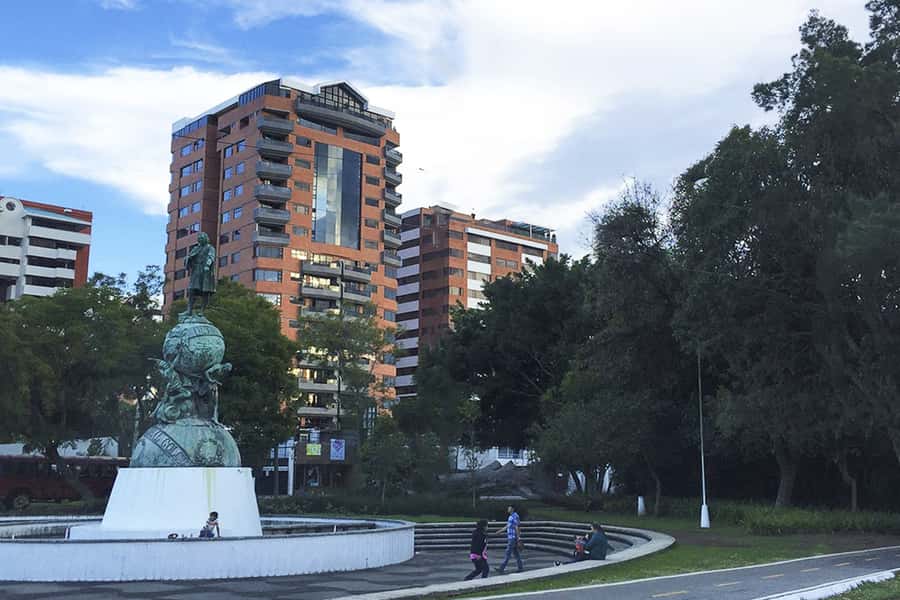
Berlin Plaza provides one of the tour’s clearest scenic moments. From here, you can see part of Guatemala City and look toward Pacaya volcano. The view gives the urban tour some breathing room and reminds you that Guatemala’s capital sits in a dramatic volcanic setting.
Bring your camera, hat, and sunglasses. The tour information specifically recommends all three, and the viewpoint is the kind of stop where bright conditions and a quick photo are likely to matter more than a long visit.
This is also a place where expectations should stay realistic. The tour promises a view of Pacaya volcano and part of the city, not a volcano hike or a long scenic outing. If your main goal is volcano scenery, this short viewpoint will only be an introduction. If you want a quick sense of the city’s setting between architectural stops, it fits the tour well.
La Reforma and its European-style monuments
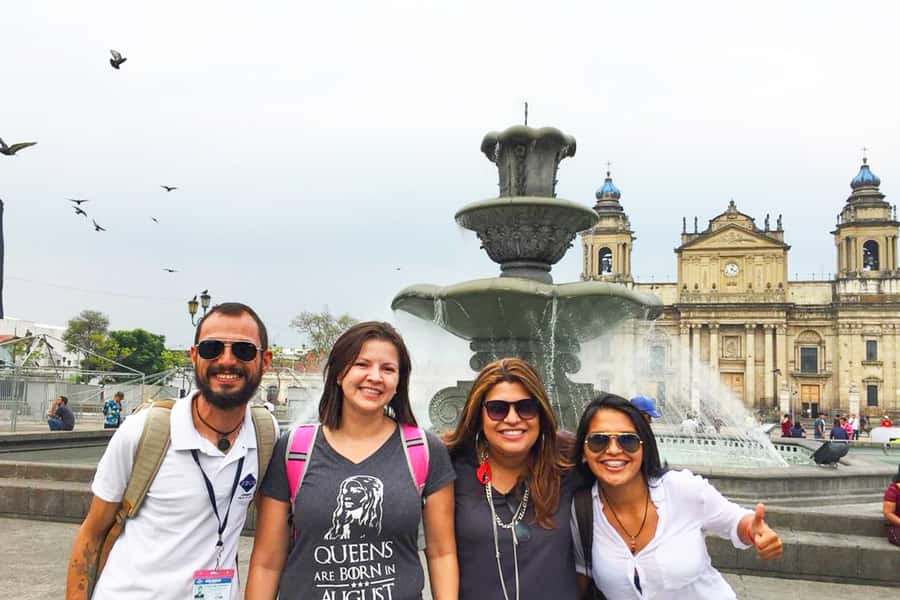
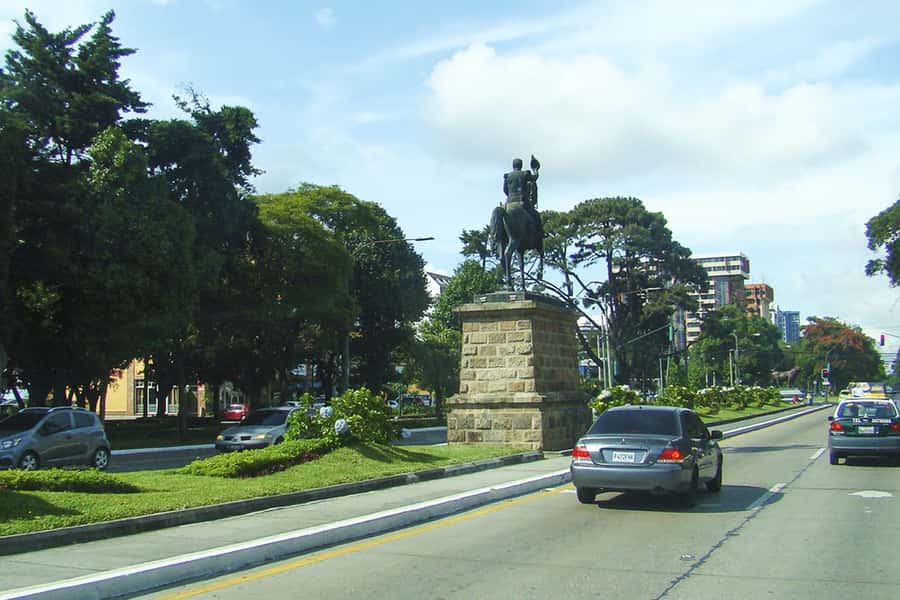
The route continues to La Reforma, an avenue inspired by the grand avenues of France. Its public art includes statues carved in stone, bronze, and marble, with many works brought from Italy.
These monuments give the avenue a formal, European character. They also offer something different from the colonial architecture around the city center. You can compare the planned avenue, imported sculpture, and modern capital buildings with the older religious and civic landmarks later in the route.
A guide adds value here because individual statues can be easy to pass without context. The tour promises ancient statues connected to important people in Guatemala and the wider region, although the precise monuments discussed can depend on the route and guide. If you enjoy public art, this section may be more interesting than its short duration suggests.
For photographers, this is one of the places where the schedule may feel tight. The three-hour format covers a lot of ground, so you may get a quick look rather than time to frame every statue carefully.
More half-day trips in Guatemala City:
- Half-Day Guatemala City Tour
★ 5.0 · 82 reviews - Guatemala City Half Day Private Tour
★ 5.0 · 42 reviews - Half Day Experience in Antigua Guatemala
★ 5.0 · 33 reviews - Antigua Half-Day Lost Cities of the Almolonga Bike Tour
★ 4.7 · 33 reviews
Yurrita Church, a small building with a personal story
Yurrita Church is one of the most distinctive stops because it is a private chapel with a mixed Baroque style. Romanesque and Byzantine elements appear together, giving the building an unusual look compared with a standard colonial church.
The chapel was built as a votive offering by Felipe Yurrita, who came from Arevalo in Castilla, Spain. He dedicated it to the Virgin of Our Lady of Sorrows, the patron saint of that town, after receiving what he regarded as favors. The story is tied especially to the saving of her life during the eruption of Santa Maria volcano.
That personal connection makes the church more memorable than a simple architectural stop. You get a sense of how faith, family background, Spanish ties, and volcanic danger overlap in Guatemala’s story.
The information provided for the tour does not promise a long interior visit or a special religious service. I would expect the guide to explain the church and show you its exterior or surroundings as the route allows. The appeal is the building’s character and story, not a lengthy church tour.
The Civic Center and Dagoberto Vasquez murals
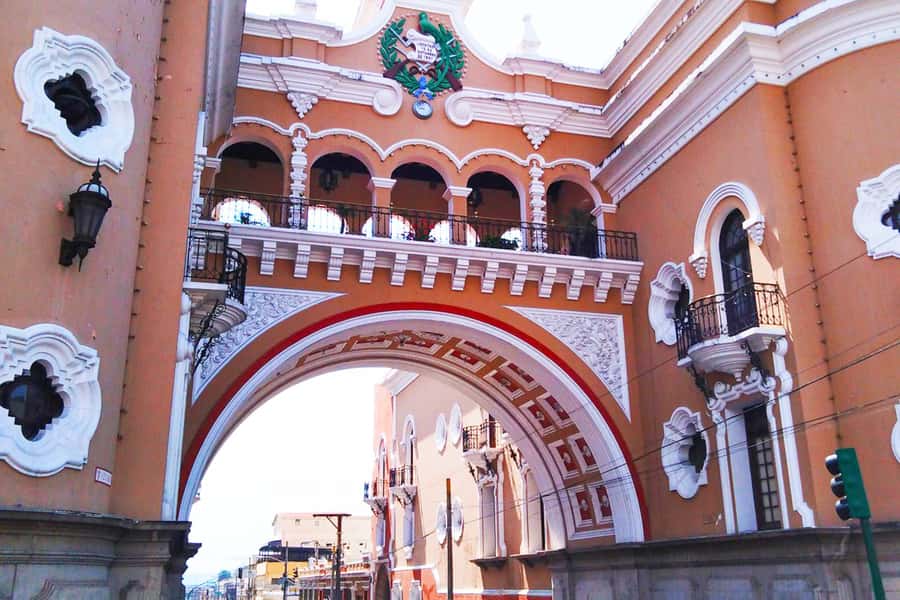
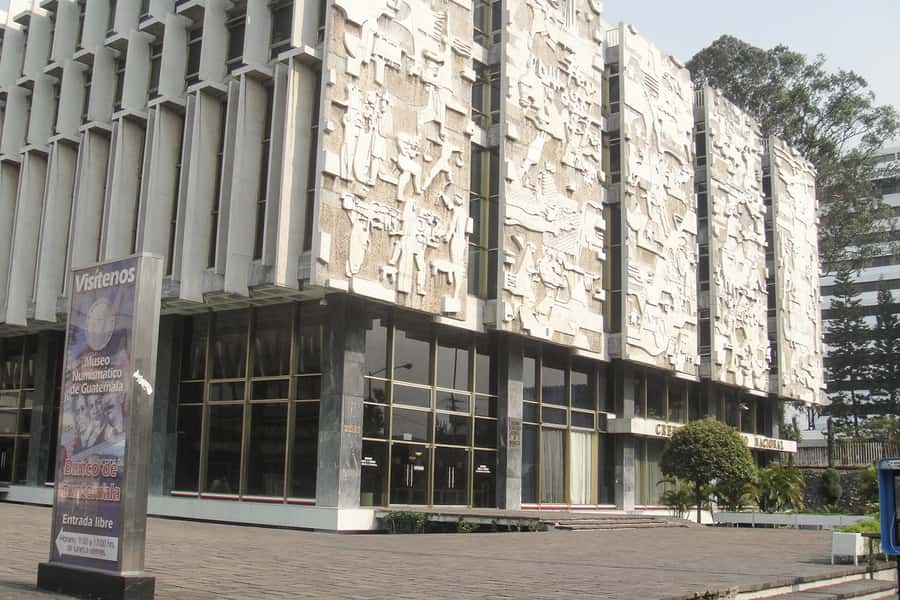
The tour then reaches Guatemala City’s civic center, a group of state buildings constructed in the middle of the 20th century. The Supreme Court, City Hall, and Bank of Guatemala are among the buildings included in this section.
The architecture here is a sharp change from Yurrita Church and the older central plaza. Instead of ornate religious design, you see the formal face of the modern state. That contrast is one of the tour’s strongest features. Guatemala City is not presented as a preserved old town, because it is not one. Its identity comes from the meeting of different periods.
The buildings are decorated with high-relief murals by Dagoberto Vasquez. These works detail the country’s history and add visual interest to what could otherwise be a quick drive through government offices.
If you like architecture and public art, listen closely during this portion. The murals are not just decoration. They give the guide a way to explain how Guatemala presents its past in public spaces. You should also expect an exterior-focused visit rather than entry into every government building, since no interior admissions are included in the tour details.
Constitution Plaza and Guatemala City’s formal center
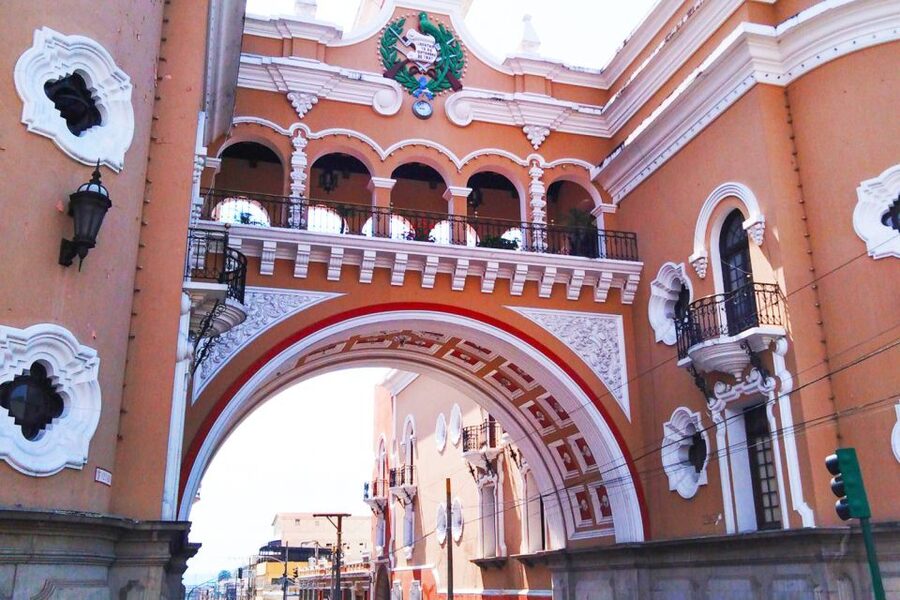
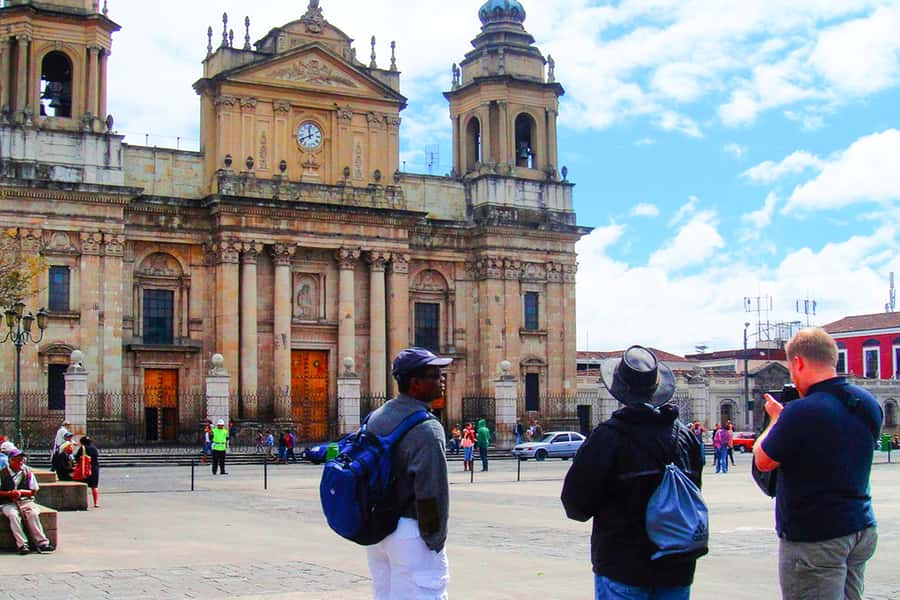
The Major Plaza of the Constitution is the tour’s central historic stop. It is surrounded by several of the city’s best-known monuments, including the National Palace, the Metropolitan Cathedral, and Centenarian Park.
This is where the colonial and civic parts of Guatemala City come together most clearly. The National Palace gives the square a strong governmental presence, while the Metropolitan Cathedral represents the city’s religious center. Centenarian Park adds open public space to the group.
Nearby, you also see the National Library, with its abstract decoration, and the General Archive of Central America. These buildings broaden the story beyond church and government. They point to education, records, and the preservation of national memory.
The plaza is likely to be one of the most useful places for getting your bearings. A guide can explain how the buildings relate to one another, while you take in the square as a whole. Still, the short tour means you may not have time to study each facade in detail or enter every building.
If you want the best photographs, be ready before you arrive. The past criticism about too few photo stops is worth taking seriously. You may need to take quick pictures while also listening to the explanation.
The Central Market beneath Tabernacle Plaza
The final sightseeing stop is the Central Market, located behind the Metropolitan Cathedral in the basement of Tabernacle Plaza. This changes the mood again. After formal avenues, statues, government buildings, and the main plaza, you get a look at a practical commercial space used for everyday shopping.
A market is valuable because it shows a city in use. Monumental buildings tell you about national identity, but a market gives you a closer sense of ordinary commerce and local routines. The tour details do not promise a food tasting, meal, or shopping credit, so plan to look around rather than expect included refreshments.
One recent tour experience specifically appreciated a juice bar visit. That may be part of how the guide handles the market or a stop that varies by day, but it is not listed as an included food or beverage. Bring money if you want to buy something, and remember that food and drinks are not included in the $34 price.
The market is a fitting finish because it keeps the tour from becoming only a parade of official monuments. It gives the route a more everyday ending before your transfer back to the hotel.
Guides, vehicles, and the value of a small group
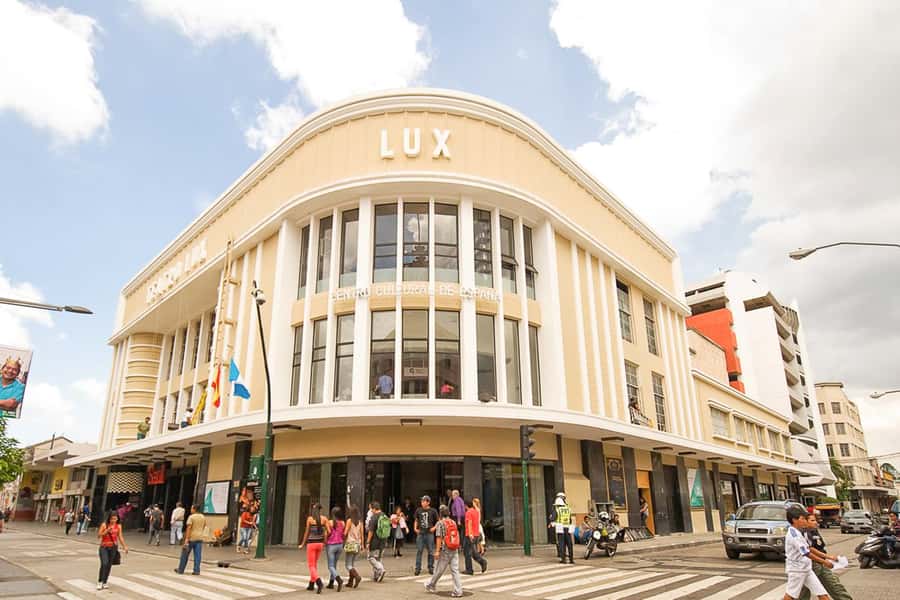
The tour includes a bilingual English and Spanish guide. Juan Pablo received especially strong praise for his friendly approach, broad knowledge of Guatemala’s history, and willingness to answer questions. Erika Maria Bonilla also praised driver William, describing the vehicle as spacious, comfortable, and very clean.
Another highly rated experience specifically credited Adira with having a great sense of the city. Those comments suggest that the guide can make a real difference here. The route itself is worthwhile, but its value depends partly on how well the guide explains the connections between the sights.
Pickup and return to your Guatemala City hotel are included for most city hotels. That is useful in a large capital where arranging several short taxi rides can waste part of a three-hour visit. It also makes the tour easier if you are unfamiliar with the city.
There is one practical warning. A pickup was reported as 40 minutes late, with no notification. That is a serious delay on a short tour, so confirm the pickup details and allow some flexibility in your schedule. The available information does not show that this is typical, but it is worth remembering before you book a tight airport transfer or another timed activity.
Is $34 a fair price?
At $34 per person, this is a good-value orientation tour if you want transport and interpretation in one package. The price includes round-trip hotel transfers from most Guatemala City hotels, a bilingual guide, and a three-hour route covering viewpoints, public art, churches, civic buildings, the main plaza, and the Central Market.
The value is strongest if you have limited time. Hiring separate transport and arranging a guide for the same route could cost more and would require you to manage the sequence yourself. The small group also gives the experience a more personal feel than a big sightseeing bus.
The price is less compelling if you want deep access to individual attractions. Food, beverages, and any optional purchases at the market are extra. The route is mainly about seeing and understanding the city from the outside, with no stated museum admissions or extended interior visits.
The rating of 4.5 from 46 reviews supports a generally strong experience, but the score should not hide the tour’s limits. Most of the praise centers on the guides, vehicle, and useful city overview. The main concern is punctuality and the limited number of photo stops.
Who should book this Guatemala City tour?
I would recommend it for a first visit, a short stay, or an afternoon when you want a structured introduction. It suits you especially well if you enjoy history, architecture, public art, and city viewpoints, but do not need to spend hours inside one museum.
It is also a practical choice for visitors who prefer not to navigate Guatemala City alone. Hotel pickup, a bilingual guide, and a maximum group size of 10 remove much of the planning work.
You may want a different plan if you want long market browsing, detailed photography, extensive walking, or in-depth museum time. The tour gives you many subjects in three hours, but it cannot give each one a leisurely treatment.
Wear comfortable walking shoes, and consider the recommended hat, sunglasses, and camera. Pets and smoking are not allowed. Tours in French, German, or Italian may be possible, but they require advance contact, added cost, and guide availability.
Cancellation is flexible up to 24 hours before the tour for a full refund, and you can reserve now and pay later. Those terms are helpful if your Guatemala plans are still shifting.
The final call
Book this tour if you want a compact, guided introduction to Guatemala City with hotel transport and a strong mix of old and modern sights. The best reasons are the city context, the volcano viewpoint, the Civic Center murals, and the chance to hear a good guide explain places you might otherwise pass without understanding.
Skip it if you need a slow, photo-heavy day or guaranteed punctuality for a tight connection. For most first-time visitors with three spare hours, though, $34 is a sensible price for getting oriented quickly and seeing the capital’s main civic, religious, and commercial sides.
FAQ
How long is the Guatemala City Explorer Tour?
The tour lasts three hours.
What is included in the price?
The price includes round-trip hotel transfers from most Guatemala City hotels and a bilingual English and Spanish guide.
How much does the tour cost?
The listed price is $34 per person.
Where does hotel pickup take place?
Pickup is included at your Guatemala City hotel, with coverage for most hotels in the city.
What languages are available?
The live guide is available in English and Spanish. French, German, and Italian may be available with added cost and subject to guide availability.
Is the tour a small-group experience?
Yes. The group is limited to 10 participants.
What should I bring?
Bring comfortable walking shoes. A hat, sunglasses, and camera are also recommended. Food and beverages are not included.
Recently added around Guatemala City
- Hobbitenango and Antigua Tour: From Guatemala City★ 4.2 · 10 reviews
- Pacaya Volcano Tour & Hot Springs from Guatemala City★ 3.9 · 11 reviews
- Guatemala City Highlights Shared Tour★ 4.6 · 14 reviews
- From Guatemala City Hobbitenango Day Tour★ 4.5 · 12 reviews
- Iximché: Archaeological Site from Guatemala City★ 4.8 · 4 reviews
- From Guatemala City: Lake Atitlan Full-Day Tour★ 4.2 · 23 reviews
- Combo Tour: Colonial Antigua & Guatemala City Explorer Tour★ 3.9 · 24 reviews
- From Guatemala City Semuc Champey in one day.★ 4.0 · 26 reviews
City Tours, compared.
From Guatemala City or Antigua: Pacaya Volcano Day Tour
Read our review →
Lake Atitlán Sightseeing Cruise with Transport from Guatemala City
Read our review →
Lake Atitlan Day Tour from Antigua or the City | Boat & Villages
Read our review →
Pacaya Volcano Tour and Hot Springs from Guatemala City
Read our review →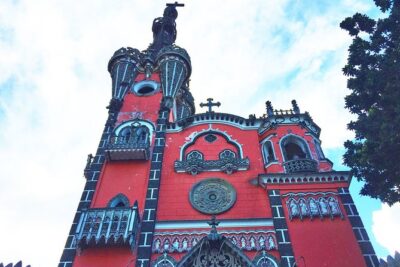
Browse the lists this tour appears in