
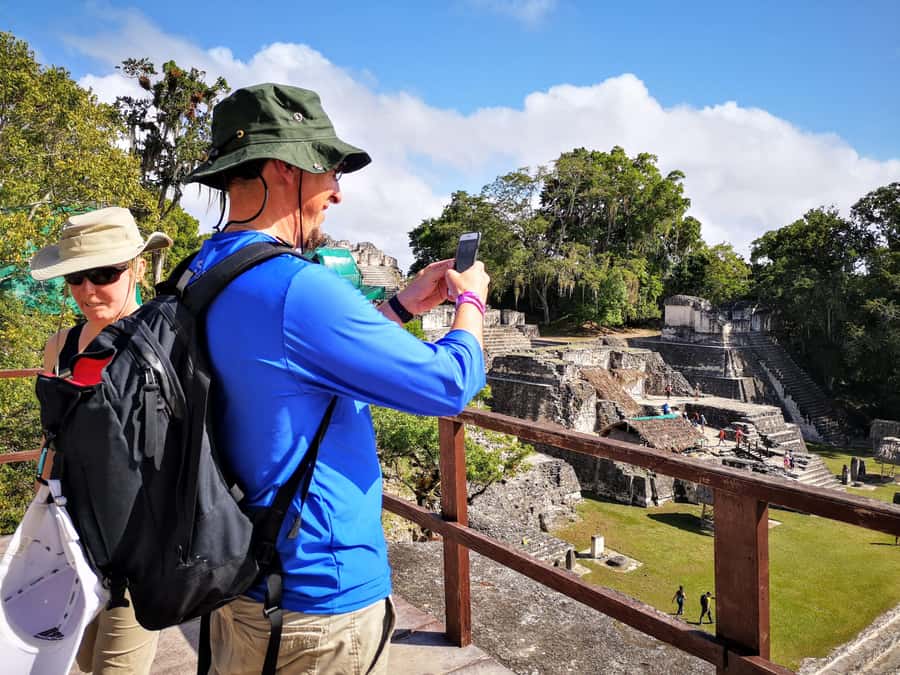
Reviewed · TIKAL RUINS TOURS
Tikal Sunrise, Archeological focus and Wildlife Spotting
Jungle sounds make Tikal feel alive. This early start combines sunrise from Temple IV with a long, well-paced walk through Tikal’s major monuments, and I like that the guide explains both Maya architecture and the plants and animals around it. I also like the careful food planning, from the early snack and coffee to the hot lunch at Jaguar Inn.
The main consideration is the physical effort. You walk for hours, climb temple stairs, and begin before daylight, while a clear sunrise is far from guaranteed. Clouds and fog often hide the sun, so you should book this for the jungle awakening and archaeological tour first, with sunrise as a welcome bonus.
In This Review
- Key points at a glance
- Starting before dawn in Petén
- Temple IV and the uncertain sunrise
- The North Acropolis and layers of royal power
- The Great Plaza and Tikal’s famous view
- The Central Acropolis and royal life
- Temple II and Temple I photography
- Wildlife spotting on the forest trails
- Food, walking, and the long morning
- The guide makes the difference
- Is the $129 price fair?
- Timing your return to Flores or the airport
- Who should book this Tikal tour?
- FAQ
- How long does the Tikal sunrise tour take?
- Are Tikal entrance fees included?
- Is sunrise guaranteed?
- What food is included?
- Can I join if I am the only person booked?
- What should I bring?
Key points at a glance
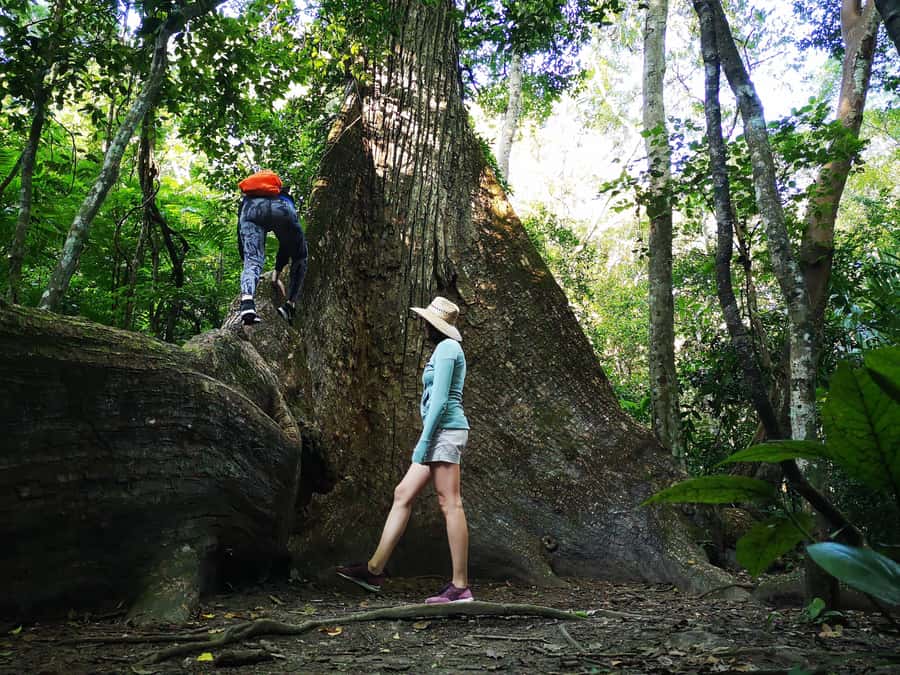
- Temple IV before sunrise: Walk through the dark forest and reach the famous viewpoint before the park fills with morning visitors.
- Wildlife and Maya ruins together: The route gives you time to look for birds, howler monkeys, plants, and other forest life without losing focus on Tikal’s monuments.
- A serious walking tour: Expect extensive walking, temple climbs, uneven trails, and a full morning on your feet.
- Personal guiding: Marlon and Jose are praised for clear English, strong knowledge of Maya culture, and close attention to wildlife and plants.
- Breakfast and lunch included: You receive a portable breakfast and a hot meal at Jaguar Inn, with five main-course choices and vegan and gluten-free options.
- Useful airport timing: The tour can work well for a same-day Flores Airport departure on TAG flight 5U131 at 14:15, provided your transfer plans are confirmed in advance.
Starting before dawn in Petén
The day begins with pickup outside your hotel or Airbnb. Service covers a wide area around Flores, Santa Elena, San Benito, San Andres, San Jose Petén, El Remate, and Tikal, with many listed pickup points. If you stay in San Miguel, you need to reach Raices Restaurant on Flores Island by boat for pickup.
An air-conditioned vehicle handles the ride to Tikal National Park. That matters in Petén, where the early departure is easier to manage with a comfortable transfer and a place to cool down later. Seat belts are available, and water refills are provided in the vehicle.
Your exact start time depends on the season and the sunrise schedule. The full outing usually takes 7 to 11 hours, so this is not a quick ruin stop. You leave the vehicle at the park trail gate and begin walking with your guide, often in darkness or near-darkness.
Bring proper shoes, comfortable clothing, rain gear, and a head for an early start. A sun hat becomes useful later, and binoculars can add a lot if birds are a priority. Mosquito repellent is applied as part of the service, but I would still pack a small personal supply if insects tend to bother you.
More Tikal trips from Flores:
- From Flores: Tikal Guided Tour with Transportation
★ 4.6 · 875 reviews - From Flores: Tikal Sunset Tour
★ 4.6 · 234 reviews - Basic Tour to Tikal Includes Transportation and Guide Service
★ 4.5 · 87 reviews
Temple IV and the uncertain sunrise
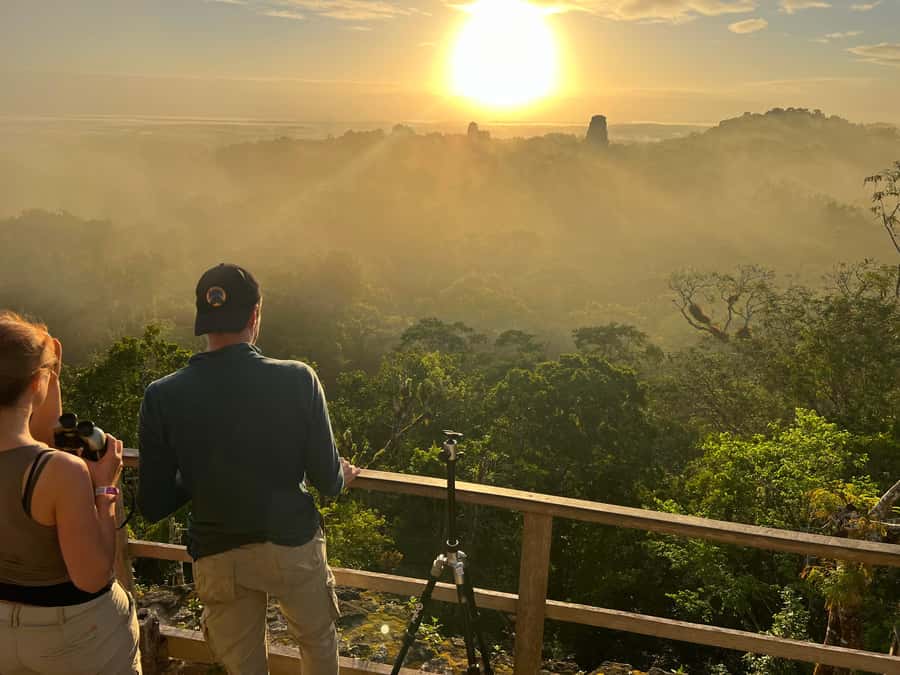
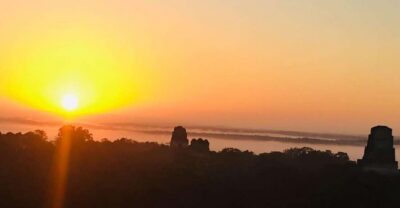
Temple IV is the first major goal. You climb to the top and wait for the day to begin over the forest. From here, Tikal’s tallest temple gives you a wide view across the treetops, with distant Maya temples rising above the jungle.
The sunrise itself is not guaranteed. Clear views are reported only about 20 percent of the time because fog and cloud are common. That fact should shape your expectations. You may see the sun appear over the trees, but you may just as easily watch the forest brighten slowly through mist.
That does not make the early visit a poor choice. The strongest part of this moment is often the sound. Howler monkeys can call through the forest, birds begin moving, and the whole site changes from darkness to morning. The forest is more active at the beginning and end of the day, which gives the wildlife focus real value.
You also receive breakfast at or around the temple viewpoint. The packed meal includes an apple, banana, a Guatemalan champurrada, a tayuyo made with a corn tortilla and refried beans, coffee, and a water refill. It is simple food, but it is exactly the sort of fuel you appreciate after a predawn climb.
Temple IV also carries a film connection. It is known as the Star Wars Temple because George Lucas filmed part of the original 1977 film, Episode IV, at Tikal. That detail is fun, but the view and the forest sounds are the real reasons to make the climb.
The North Acropolis and layers of royal power
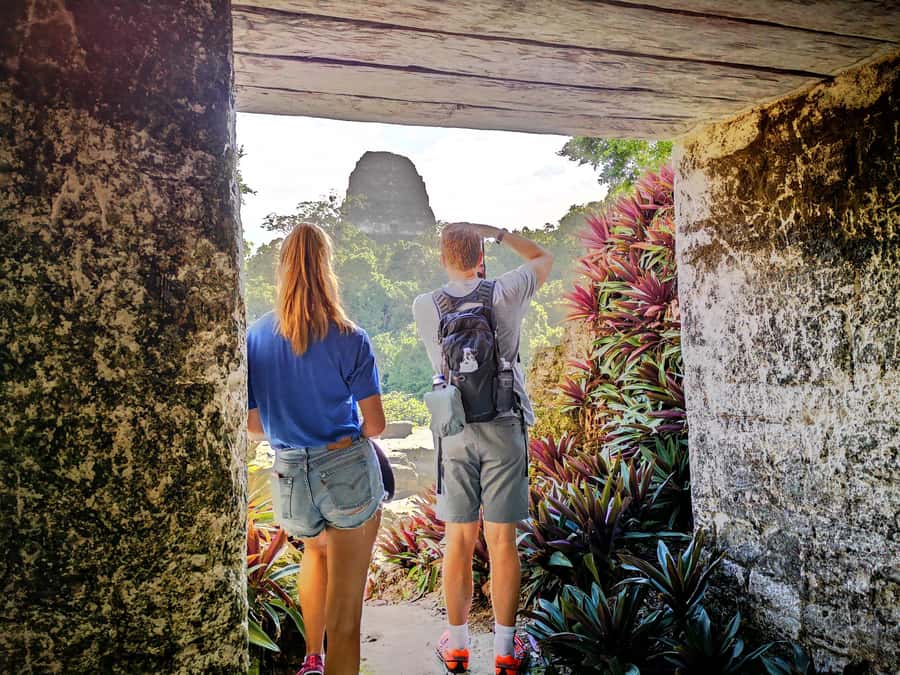
After Temple IV, the route moves into Tikal’s main archaeological areas. The North Acropolis served as a royal cemetery for Tikal’s kings and queens. Its architecture is especially interesting because the complex was built up in layers over time.
A useful comparison is an onion. Each new construction covered or altered an earlier one, and the exposed sections let you see how the site grew. Some layers include masks connected with the rain god and sun god, giving the stonework a visual link to Maya belief and daily life.
This is where a good guide earns the fee. Tikal can look like a series of plazas and stairways if you walk through it without context. A guide such as Marlon or Jose can explain why a structure mattered, how the buildings changed, and what details deserve your attention.
The North Acropolis is not simply a pile of old stone. Its value comes from reading the layers. Give yourself time to look closely at the masks and the way later construction frames earlier work.
The Great Plaza and Tikal’s famous view
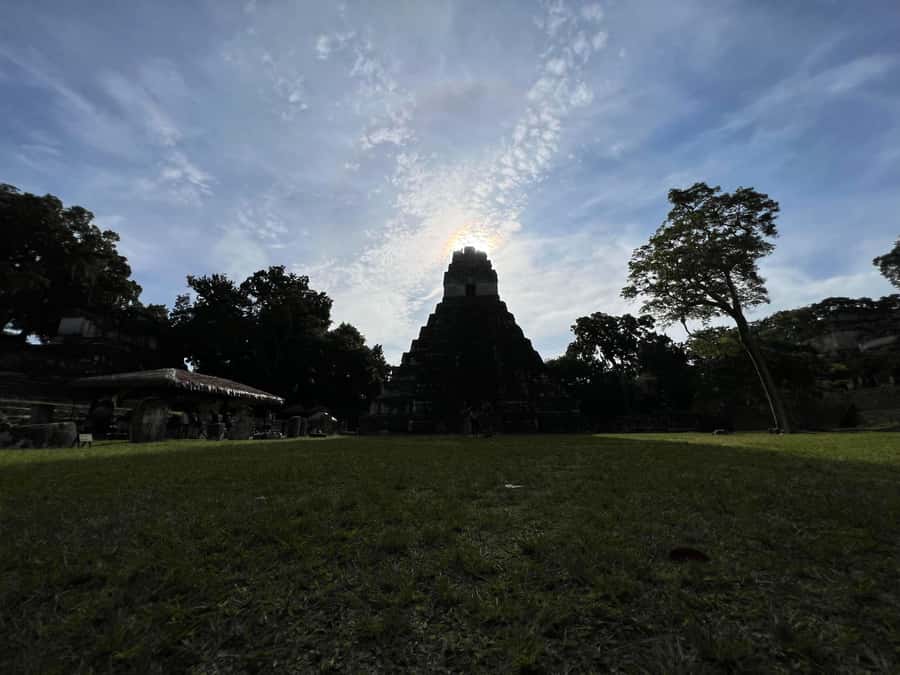
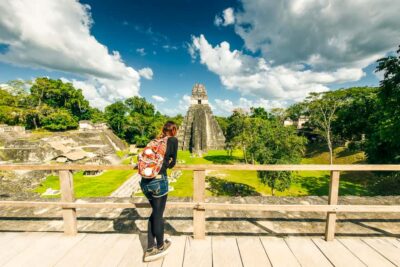
The Great Plaza is the central visual moment of the tour. It is the site’s most restored complex and includes Temple I, Temple II, the North Acropolis, and rows of carved stelae.
The stelae are important because some show portraits of Tikal’s rulers. These carved monuments connect the buildings to individual kings and political power rather than leaving you with anonymous ruins. Excavation in the Great Plaza began in the 1960s through work by the University of Pennsylvania.
I like the chance to see the plaza from several angles rather than simply stopping for one photograph. The scale becomes clearer when you look across the open space toward the temples, then turn back toward the acropolis. The tour also leaves time for pictures, so you are not pushed past the main views.
The restored condition can be a benefit and a limitation. You can understand the layout more easily, but some visitors prefer the rougher, less restored sections of the site. This tour includes both polished views and forest trails, which gives you a better sense of the whole place.
More wildlife trips around Flores:
- Tikal Sunset, Archeological focus and Wildlife Spotting
★ 5.0 · 15 reviews
The Central Acropolis and royal life
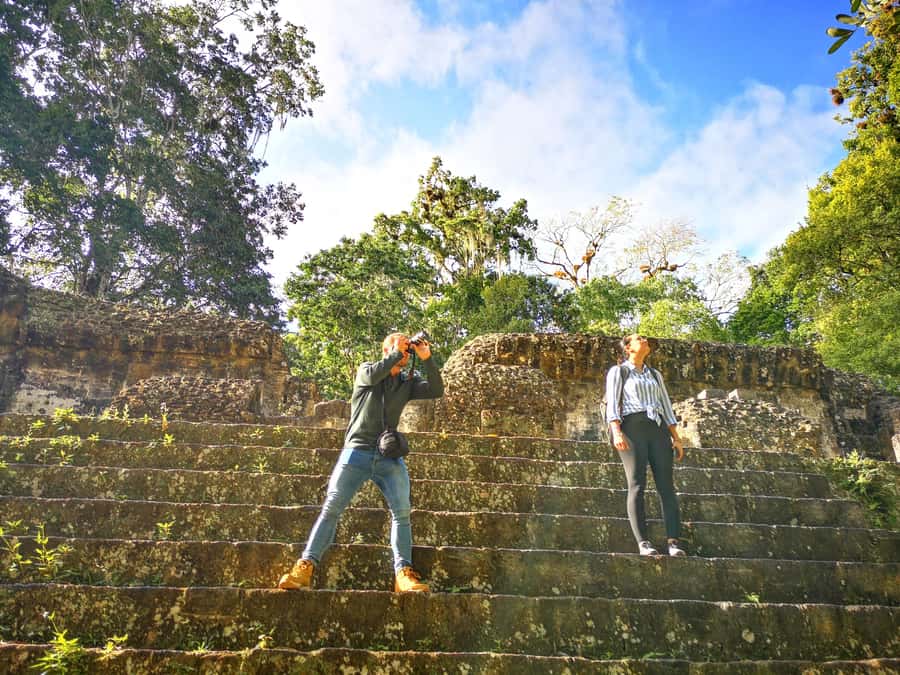
The Central Acropolis was a residential area for Tikal’s royal family. It contains six courtyards, with three restored, and likely served as accommodation for royal visitors from other Maya cities.
This area helps you think beyond temples and ceremonies. Tikal was also a court, a political center, and a place where rulers received visitors and managed relationships with other cities. The complex includes a five-story palace, and some original wooden lintels remain above its doorways.
That detail is easy to miss without help. Stone survives better than wood in the public imagination, so the surviving lintels give you a rare reminder that Maya buildings included important wooden elements as well as carved stone.
The Central Acropolis is also a place where the walking begins to feel substantial. You have already climbed Temple IV and crossed major complexes. Take water when offered and use the stops to recover, especially during warmer months.
Temple II and Temple I photography
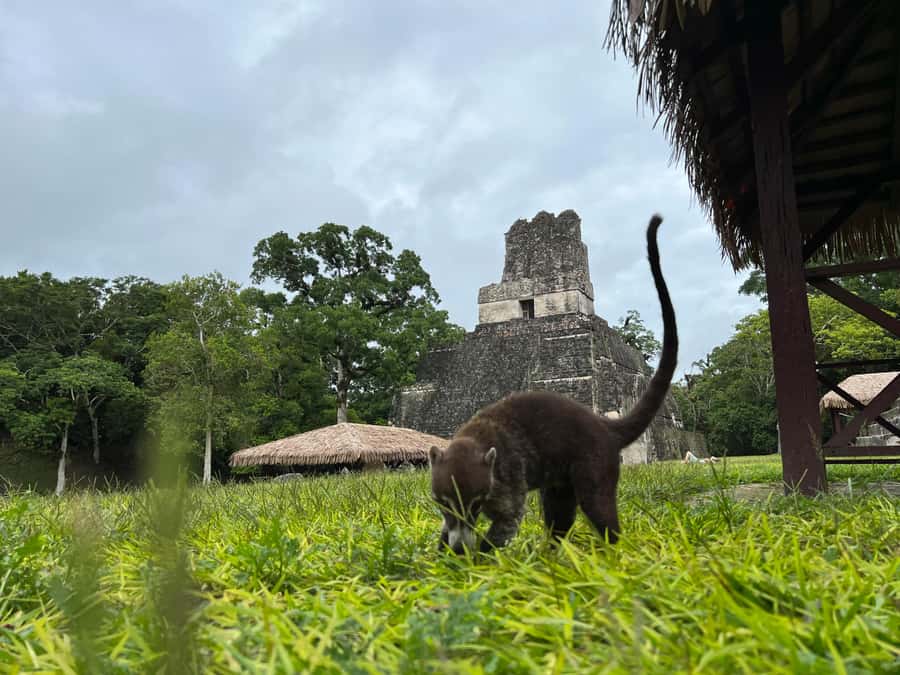
Temple II is one of the best places to photograph the Great Plaza. You climb it for a higher view toward Temple I, the North Acropolis, and the open ceremonial space. Masks carved near the top add detail to the otherwise massive structure.
The view from Temple II is more intimate than the broad sightline from Temple IV. Instead of looking over the forest, you are looking into the heart of Tikal. It is an excellent spot for a wide photograph, but you should also turn your camera toward the carved masks and nearby architectural details.
Temple I is the site’s most recognizable monument. Its official name is the Temple of the Great Jaguar, named for an original wooden lintel carved with a jaguar. That lintel is now held in a museum, but the temple remains the defining image of Tikal.
The route takes you around Temple I for photographs from different angles. Since climbing access and viewpoints can change, the value here is the time to frame the temple from the plaza rather than simply checking it off a list.
Wildlife spotting on the forest trails
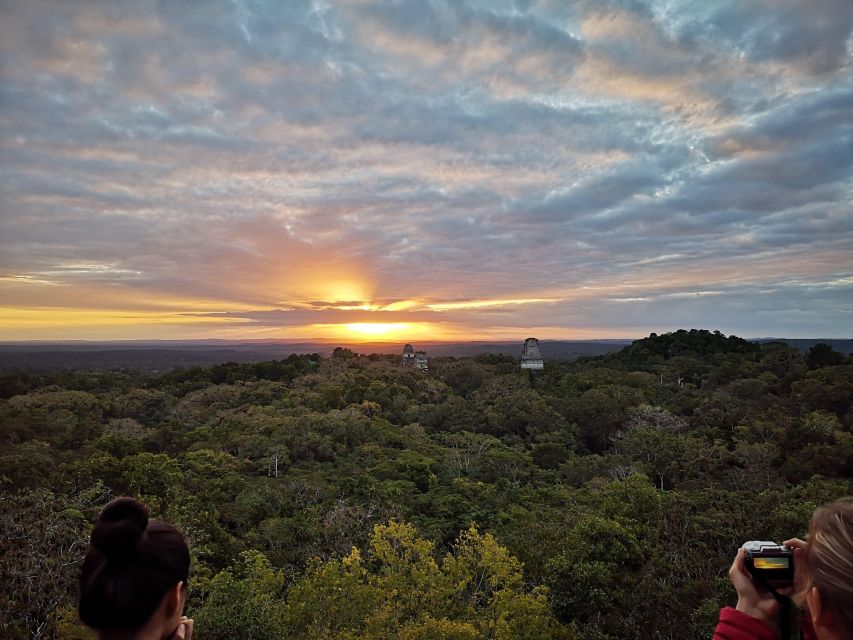
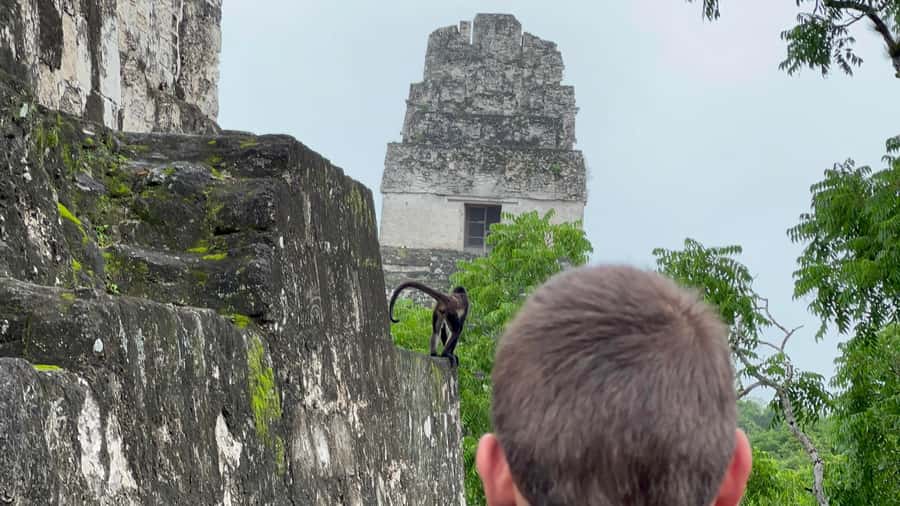
This is not a ruins tour with a token nature walk. The route uses nature trails, and the early timing is chosen partly because wildlife is more active at the start and end of the day.
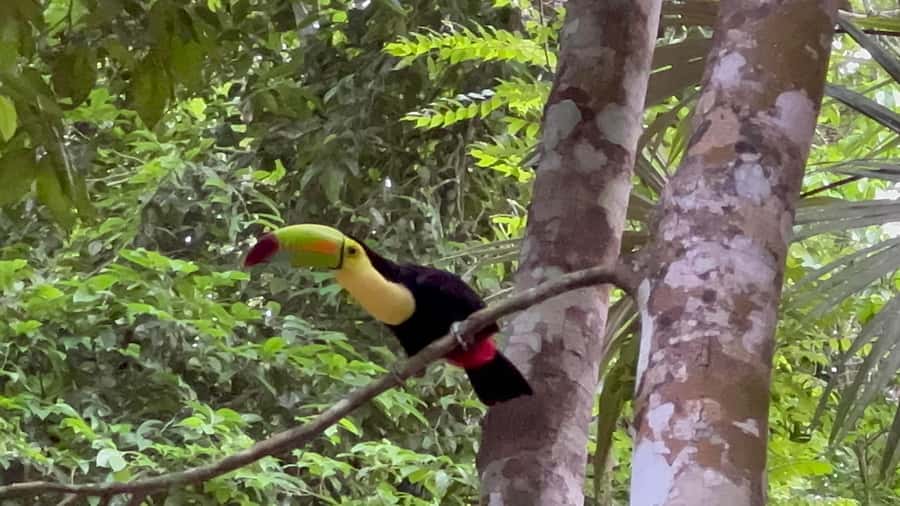
You might hear howler monkeys before seeing them. Their calls can be loud and territorial, and they add a memorable layer to the walk. Birds and other forest species may also appear, while your guide points out plants by their Latin and Maya names.
The exact sightings are not promised, so bring binoculars without expecting a wildlife checklist. The best approach is to enjoy the sounds, pauses, and small discoveries. A guide who understands biology can turn an ordinary plant or distant call into part of the place’s story.
The wildlife focus also changes how you move through the ruins. You are not rushing from temple to temple. You stop, listen, scan the trees, and then return to the architecture. That slower rhythm is one of the strongest reasons to choose this tour over a basic transport-and-photo visit.
Food, walking, and the long morning
The tour includes more food than the early breakfast alone. The walking portion ends at the Tikal National Park trail gate around 10:30 in the morning, followed by a hot meal at Jaguar Inn Restaurant.
Lunch includes five choices, with gluten-free and vegan options available. Some meals are described as a good three-course lunch, so this is more substantial than a snack stop. After hours on trails and temple steps, a proper meal feels like part of the tour rather than a minor extra.
Still, you should judge the physical demand honestly. The route is extensive, includes climbing, and lasts several hours. Wheelchair access is available for the activity, but the tour description also makes clear that the archaeological walk includes trails and temple climbs. Ask the operator about your specific mobility needs before booking.
Comfortable shoes matter more than stylish ones. Pack rain gear even if the morning forecast looks fine, and keep your reusable bottle handy. Tikal’s heat, humidity, uneven ground, and early start can combine into a tiring day.
The guide makes the difference
The guide is central to the experience. Marlon is praised for explaining Maya architecture, culture, plants, and animals, and for adjusting the walk to suit different interests. Jose is also praised for friendly service, clear explanations, and leading a small group through the forest before sunrise.
That flexibility matters. If you care most about birds, you can ask for more time with wildlife. If you want architecture and royal politics, the guide can give those subjects more attention. The strongest version of this tour is not a memorized speech delivered at every stop. It is a conversation shaped around your questions.
The company operates with even one person and does not add a solo departure fee. Private and small-group formats are available, which suits anyone who wants more control over pace and photography.
The tour is offered in English and Spanish. For an archaeological site as large as Tikal, strong communication is not a luxury. It helps you understand why each complex matters and keeps the long route from becoming a blur of names.
Is the $129 price fair?
The advertised price is $129 per person, but entry fees are separate. For visitors aged 10 and older, sunrise and daytime admission total $34, making the usual combined cost $163 before any local discount or special arrangement.
The fee covers hotel pickup and drop-off, an air-conditioned vehicle, a professional English-Spanish guide, breakfast, lunch, a Tikal map, mosquito repellent application, and vehicle water refills. You can also ask the operator to arrange the park tickets, which removes one practical task even though the tickets still cost extra.
For a solo visitor, the value is stronger because the departure is guaranteed even with one person. If you book the small-group option as the only adult in your group and another adult later books the same schedule, the entry cost can be included for you, reducing your cost by $34. Guatemalan residents who provide a photo of their DPI pay only $7 in entry fees.
I consider the price fair if you want a guide-led visit with wildlife attention, food, and transport. It is less attractive if you only want a quick look at the main plaza and already have transport and a guide arranged. The long route and specialized early start are what justify paying more than a basic day trip.
Timing your return to Flores or the airport
After lunch, you are returned to your pickup location unless you arrange a different drop-off in advance. The wide pickup and drop-off network covers hotels and other named locations around Lake Petén Itzá and Flores.
This tour is designed to fit passengers flying from Flores Airport that afternoon on TAG flight 5U131 at 14:15. I would still confirm the timing directly before relying on it for a flight. The activity can last anywhere from 7 to 11 hours, and traffic, park timing, meal timing, and the distance to the airport all matter.
If you are not flying, the flexible drop-off option is useful. You can arrange a different location ahead of time, but do not leave that conversation until the morning of the tour.
Free cancellation is available up to 24 hours in advance, and you can reserve now and pay later. Those terms help if your Petén schedule is still shifting.
Who should book this Tikal tour?
I would choose this tour if you want Tikal to feel like a living forest as well as an archaeological site. It is especially well suited to photographers, birdwatchers, first-time visitors who want context, and anyone who prefers a small or private group.
It also works for people with only one full day in Tikal who want sunrise, the major ruins, wildlife, breakfast, lunch, and round-trip transport in one organized outing. The detailed route means you see far more than the Great Plaza alone.
I would hesitate if you dislike predawn departures, long walks, temple climbs, or uncertain weather. You should also think twice if a guaranteed sunrise photograph is your main goal, since the sun appears clearly only part of the time.
FAQ
How long does the Tikal sunrise tour take?
The experience lasts 7 to 11 hours, depending on the starting time and schedule. The walking tour ends at the Tikal National Park trail gate at about 10:30 in the morning, followed by lunch and the return transfer.
Are Tikal entrance fees included?
No. Sunrise and daytime entry fees total $34 for each visitor aged 10 and older. The operator can arrange the tickets for you. Guatemalan residents who provide a photo of their DPI pay $7.
Is sunrise guaranteed?
No. A clear sunrise is seen only about 20 percent of the time because cloud and fog are common. The tour still offers jungle sounds, active wildlife, and Temple IV views during the forest’s early morning awakening.
What food is included?
The portable breakfast includes an apple, banana, Guatemalan champurrada, tayuyo, coffee, and water. Lunch is served at Jaguar Inn Restaurant and includes five main-course options, with gluten-free and vegan choices.
Can I join if I am the only person booked?
Yes. The tour guarantees departure even with one person and does not add a charge for operating with a single guest. Private and small-group options are also available.
What should I bring?
Bring comfortable shoes, comfortable clothing, a sun hat, camera, rain gear, binoculars, an ID card or copy, and a reusable water bottle. Pets are not allowed.
More early starts in Flores
- From Flores: Tikal Ruins Sunrise Guided Tour
★ 3.3 · 7 reviews - From Flores: Tikal Sunrise Extended Private Tour
★ 5.0 · 3 reviews - From Flores: Tikal Sunrise Archaeological Tour
★ 4.5 · 147 reviews - Pacaya Volcano Morning Tour from Antigua
★ 5.0 · 75 reviews
Recently added around Flores
- Tikal from Hotel Camino Real El Remate – All Inclusive★ 5.0 · 3 reviews
- From Flores: Guided Tour to the Ruins of Tikal★ 5.0 · 3 reviews
- From Flores: Tikal Sunrise Extended Private Tour★ 5.0 · 3 reviews
- Tikal Privade Tour all included★ 4.5 · 3 reviews
- From Flores: Tour Tikal All Inclusive★ 5.0 · 4 reviews
- From Flores: Blue Crater All Inclusive★ 5.0 · 4 reviews
- Impressive Tikal from Flores with Lunch★ 5.0 · 5 reviews
- Tikal Group Tour from Flores★ 4.8 · 5 reviews
Tikal Ruins Tours, compared.

Basic Tour to Tikal Includes Transportation and Guide Service
Read our review →
Tikal Private Day Tour Maya Adventure from Flores
Read our review →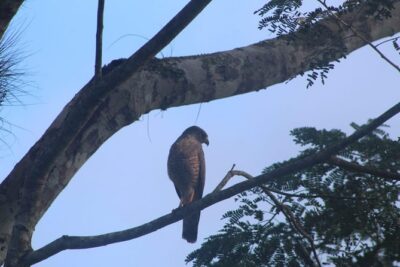
Tikal Tour From Flores, airport and Tikal hotels in Guatemala
Read our review →
Tour to Tikal: from Mundo Maya Airport in Flores
Read our review →Browse the lists this tour appears in