
Reviewed · WALKING TOURS
Walk Antigua Like a Local
Antigua reveals itself one church, courtyard, and cobbled street at a time. I like the way this $32 half-day walk joins the famous sights with local details about food, coffee, Mayan customs, and daily life. I also like that guides such as Roberto, Carlos, Felix, Esteban, Tony, and Manuel have adapted the route to personal interests, rather than delivering the same stiff speech to everyone. The main drawback is simple: you will walk a lot, and lunch is not included.
The tour runs about three to four hours, beginning at 9:00 a.m. and ending back at Casa de la Mandarina. Good walking shoes matter, and the visit to San Francisco El Grande has an extra admission cost. Still, water, taxes, and an artisanal beer tasting are included, giving this a strong price for a first look at Antigua.
In This Review
- Key points before you book
- Why this $32 walk is a smart first look at Antigua
- Central Park gives you Antigua’s front door
- San Francisco El Grande adds a human story
- Santo Domingo shows how much was lost
- La Merced explains Antigua’s low church design
- Santa Catalina Arch is the classic photo stop
- Chocolate turns cacao into a cultural lesson
- Jade connects ancient craft with modern shopping
- Local details make the walk more useful
- Timing, comfort, and practical value
- Who should book Walk Antigua Like a Local?
- Should you book it?
- FAQ
- How much does Walk Antigua Like a Local cost?
- How long does the experience last?
- What time does the tour begin?
- Where does the tour start?
- Where does the tour finish?
- What sights are included?
- Is lunch included?
- Is admission to San Francisco El Grande included?
- What is the cancellation policy?
Key points before you book
- See Antigua’s main sights in one morning: The route covers Central Park, San Francisco El Grande, Santo Domingo, La Merced, Santa Catalina Arch, chocolate, and jade.
- Guides make the difference: Roberto, Carlos, Felix, Esteban, Tony, and Manuel have been praised for local insight, flexibility, humor, and practical advice.
- Expect plenty of walking: The tour lasts three to four hours, and one person specifically recommends sturdy shoes.
- Small group setting: The maximum group size is 15 people, small enough for questions and a personal feel.
- Good food and shopping orientation: You receive tips about places to eat, ATMs, coffee, chocolate, jade, and local customs.
- Useful first-day timing: The 9:00 a.m. start leaves the rest of your day open for museums, lunch, or a volcano view.
Why this $32 walk is a smart first look at Antigua
Antigua is easy to admire and surprisingly easy to misunderstand. Its yellow facades, ruined churches, grand courtyards, and volcano views can fill a camera quickly, but the story behind them takes longer to see. A local guide helps connect the pieces.
That is the real value here. For $32, you are not simply paying to walk between landmarks. You are getting an introduction to how Antigua was shaped by Spanish colonial planning, earthquakes, religious orders, Guatemalan traditions, coffee, cacao, and jade.
The route also gives you a useful map of the city. You begin in the central square, move through churches and convent ruins, pause for chocolate and jade, and return to the starting point. If Antigua is your first stop in Guatemala, this can help you decide where to spend the rest of your visit.
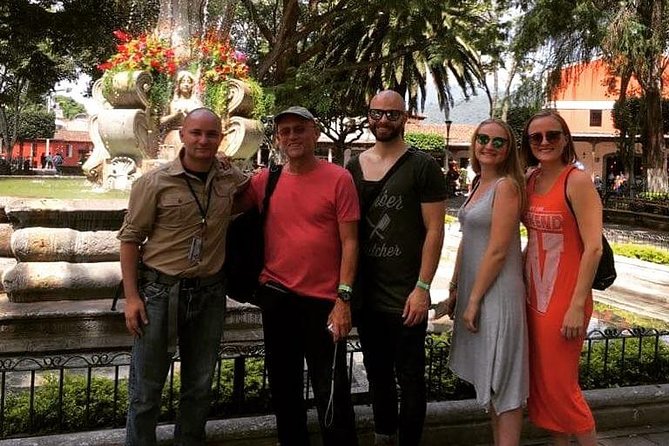
The group limit is 15. That is not a private tour, but it is still a manageable size for a walking route. The guide can answer questions, point out details, and sometimes adjust the experience. Tony, for example, is described as flexible about taking people to places they wanted to see, while Roberto is praised for practical advice about ATMs and restaurants.
The strongest praise goes to the guides themselves. Roberto is described as friendly, organized, funny, and full of stories. Felix has shared information about Mayan traditions and spiritual beliefs. Carlos has covered history, coffee, food, and culture. Esteban has even been praised for his photography.
Those details matter because Antigua’s appeal is not limited to architecture. A good guide can help you notice how people use the plazas, how religious buildings were rebuilt, and where coffee, chocolate, and jade fit into Guatemalan life.
More Walking Tours in Antigua
- Antigua Guatemala: City Highlights Guided Walking Tour
★ 5.0 · 462 reviews - Antigua Guatemala: Street Food Walking Tour with Tastings
★ 4.8 · 87 reviews - La Antigua Horror Stories Night Walking Tour
★ 4.9 · 74 reviews
Central Park gives you Antigua’s front door
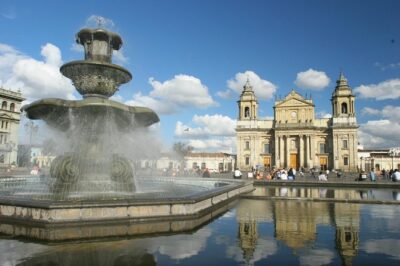
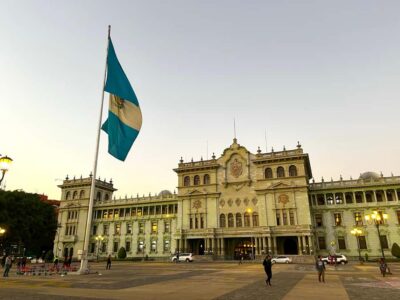
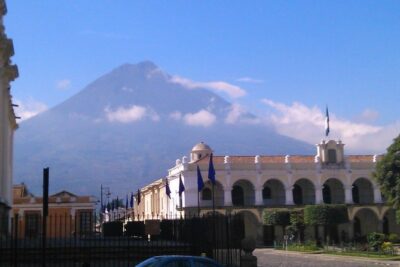
The tour starts at Central Park, the city’s main square. It is surrounded by the Municipal building, the former Palace, important religious buildings, and the Cathedral. During the Spanish colonial period, it served as the main meeting place and point of reference.
You spend about 20 minutes here, with no admission fee. That may sound brief, but it is enough time to understand the layout and watch the city at work.
Central Park is useful as an orientation point. Vendors and local people fill the area throughout the day, with more activity on weekends. You might use the stop to grab a coffee or juice, though the tour itself does not include lunch.
I like beginning here because it gives the rest of the walk a clear frame. Instead of seeing Antigua as a string of unrelated churches, you begin with the civic and social center. Listen for the guide’s explanation of how the square relates to the buildings around it, then return later on your own for people-watching.
San Francisco El Grande adds a human story
Next comes Iglesia de San Francisco El Grande, one of Antigua’s major religious sights. The church suffered damage from the earthquakes of 1874 and 1917 and had previously been abandoned. It was rebuilt during the second half of the twentieth century after the Guatemalan state again allowed religious orders to own property.
Franciscan friars returned in 1960 and began a restoration that focused on making the building structurally sound. That approach was controversial because restoration can involve a choice between preserving ruins, recreating an earlier appearance, or building something safe and usable.
You spend about 25 minutes here. Admission is not included, so confirm the current entry charge when booking or at the entrance.
The key reason to visit is the tomb of Pedro de San José de Betancur, the only saint of Guatemala. He was a Franciscan monk who founded a hospital for poor people in Antigua. His story gives the church more weight than a quick photo stop. You are seeing a place connected to care for the sick and poor, not only a restored colonial facade.
This is also a useful stop for understanding Antigua’s earthquakes. The city’s churches were repeatedly damaged, and the low, sturdy forms you see across town often reflect hard lessons from the region’s seismic activity.
Santo Domingo shows how much was lost
Casa Santo Domingo occupies the former Convent of Santo Domingo. In the seventeenth century, the convent was among the largest in the Americas. The Santa Marta earthquake of 1773 destroyed almost all of it.
Today, the site has developed into Hotel Museo Spa Casa Santo Domingo. The description of each corner as a page from the past is poetic, but the practical point is clear: this is a place where ruins and modern use sit together.
You have about 20 minutes here, and admission is listed as free. That makes it an easy stop for a short introduction to Antigua’s religious institutions and earthquake damage.
Do not expect a long museum visit during this tour. Twenty minutes gives you a taste rather than a full examination of the complex. If the ruins catch your interest, you may want to return later with more time. The guide’s explanation is especially useful because broken walls alone do not tell you how large or important the convent once was.
A completely different sort of day around Antigua:
- From Antigua: Adventure, 2-Day Hiking to Acatenango Volcano
★ 4.4 · 1,189 reviews - From Antigua: Pacaya Volcano Tour in English/Spanish
★ 4.5 · 930 reviews - From Antigua: Pacaya Volcano Trek
★ 4.4 · 798 reviews - Antigua, Guatemala: Volcano Acatenango Overnight Hiking
★ 4.6 · 645 reviews
La Merced explains Antigua’s low church design
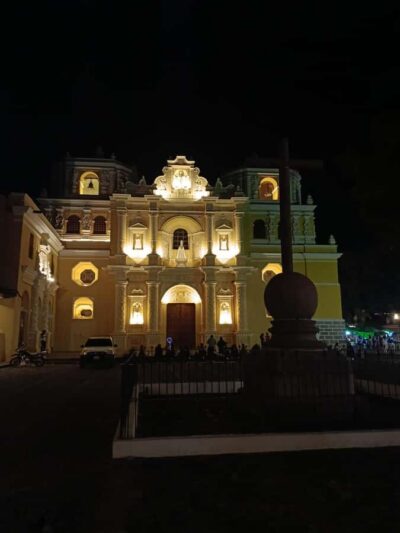
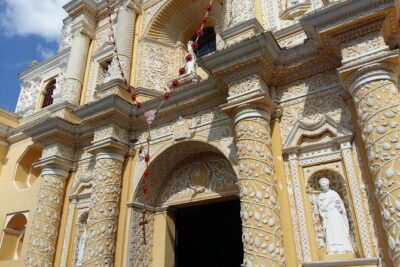
La Iglesia de la Merced is known for its Baroque architecture and its unusually low bell towers. The low height was intentional, designed to help the church withstand frequent earthquakes.
That practical design choice is one of the best details in the route. It turns architecture into a record of local experience. You are not only looking at decoration. You are seeing how builders responded to a powerful natural force.
The church sits in the heart of Antigua, so it is easy to combine with later independent exploring. Look closely at the facade and the proportions of the towers. The guide can help you place La Merced within the larger pattern of earthquake-aware construction across the city.
The listed schedule does not give a separate time for this stop, so the pace may depend on the group and the guide. If this church matters to you, tell the guide early. The tour is designed to be flexible enough to respond to questions and interests.
Santa Catalina Arch is the classic photo stop
The yellow Santa Catalina Arch is Antigua’s most recognizable landmark. Built in the seventeenth century, it connected the Santa Catalina Convent with a school. Cloistered nuns could pass between the buildings without going outside.
The arch, convent, and church nave form part of the former Santa Catalina complex. On a clear day, Volcán de Agua appears behind it, creating the classic Antigua photograph.
This stop can feel familiar because the arch appears in so many pictures, but the original purpose makes it more interesting. It was not built as decoration. It solved a practical problem while respecting the rules of convent life.
You will want a camera ready, but do not let the photo stop become the whole point. Look at the arch as part of the old convent layout, then ask the guide about the religious and social rules that shaped the building.
Chocolate turns cacao into a cultural lesson
At the Chocolate Museum, you learn about cacao’s history, the cacao tree, and its importance in Guatemala. Choco Museo also has an artisanal factory that makes chocolate from organic Guatemalan cacao beans.
The tasting includes several styles, from pure dark chocolate to blends flavored with cardamom, cinnamon, and coffee. Those flavors connect the stop to ingredients and tastes familiar in Guatemala.
This is one of the more hands-on parts of the morning. Instead of only hearing about cacao, you get to sample how the bean changes when combined with local flavors. The stop also explains cacao’s effect around the world and how its use has changed over time.
The chocolate visit is a nice counterpoint to the churches and ruins. Antigua can sometimes feel like one long architecture lesson, and this stop brings in agriculture, trade, food, and modern craft production.
If you have dietary concerns, ask about the samples before tasting. The supplied details do not list ingredients, allergies, or dietary substitutions, so you should confirm directly.
Jade connects ancient craft with modern shopping
Guatemala is one of only four countries in the world with deposits of jadeite jade. Jade has been used for more than 5,000 years in China and Mesoamerica to make ornaments, utensils, weapons, and tools.
The stone is associated with good luck, eternal life, abundance, and hope. In Guatemala, its hardness and strength made it useful for decoration, protection, and hunting.
This stop helps you understand why jade appears so often in Guatemalan shops. You are not simply being shown a colorful stone. You are learning why jade has carried practical and spiritual meaning for thousands of years.
For you, the stop is useful even if you do not plan to buy anything. A guide can explain the cultural importance of the material and help you separate that story from the sales pitch you may hear elsewhere. The tour details do not state that a purchase is required, so treat this as an educational stop, not a shopping obligation.
Local details make the walk more useful
The best part of a city introduction is often what happens between the official sights. Guides have shared advice about ATMs, restaurants, coffee, food, Mayan traditions, architecture, and local culture.
One person also enjoyed an unexpected ride on a chicken bus and a walk through the market. Those additions are not guaranteed in the published route, so do not book expecting them. Still, they show that the experience may include ordinary parts of city life when timing and group interests allow.
That local orientation can save you time later. You can ask where to eat, where to find coffee, and how to approach the city with more confidence. Several guides are praised for making the walk feel relaxed and personal, with humor rather than a formal lecture.
The tour is conducted in English based on the supplied information about the reviews, though the booking details here do not explicitly state the operating language. Confirm that point if it matters to you.
Timing, comfort, and practical value
The meeting point is Casa de la Mandarina at 2a Calle Poniente 2, Antigua Guatemala 03001. The tour begins at 9:00 a.m. and ends at the same location after roughly three to four hours.
Morning is a sensible time for a walking route. You have the rest of the day for lunch, a museum, a second look at La Merced or Santa Catalina Arch, or simply a slow afternoon in Central Park.
Wear good shoes. Antigua’s route covers several sights, and one direct account warns that you will walk a lot. Bring sun protection and water, although bottled water is included.
The price includes all fees and taxes, bottled water, and an artisanal beer tasting with taxes. Lunch is not included, and admission to San Francisco El Grande is also excluded. At $32, the value is strongest if you plan to visit several of these places anyway and want context rather than just photographs.
The maximum is 15 people. Most people can participate, service animals are allowed, and the meeting point is near public transportation. The tour requires good weather and a minimum number of participants. You can cancel at least 24 hours before the start for a full refund, but late cancellations and late changes are not accepted.
Who should book Walk Antigua Like a Local?
I would recommend this tour to first-time visitors, solo explorers, couples, families, and anyone with only a short stay in Antigua. It gives you a useful city overview without taking the entire day.
It is also a good match if you care about more than architecture. The route brings in cacao, coffee, jade, Franciscan service, Mayan traditions, local food, and practical city advice.
You may want a different plan if you prefer to explore at your own pace, spend an hour inside every church, or avoid group walking. The schedule moves across several sights, so you will not have unlimited time at each one.
Tell the guide what interests you at the start. The strongest experiences described here came from guides who adjusted the walk to questions and personal priorities. Ask about restaurants, ATMs, coffee, Mayan traditions, or photography. That is where the local advantage becomes most useful.
Should you book it?
Book Walk Antigua Like a Local if you want an affordable, well-rounded first morning in Antigua and prefer learning the story behind the sights. The $32 price is fair for a three to four-hour route with a small group limit, water, taxes, and a beer tasting.
The tour is especially worthwhile at the start of your stay. You will recognize the city’s main landmarks, understand the impact of earthquakes, and leave with practical ideas for food and further exploring. Just budget for the San Francisco admission, bring sturdy shoes, and remember that lunch is your responsibility.
FAQ
How much does Walk Antigua Like a Local cost?
The tour costs $32 per person.
How long does the experience last?
The walking tour lasts approximately three to four hours.
What time does the tour begin?
The tour starts at 9:00 a.m.
Where does the tour start?
You meet at Casa de la Mandarina, 2a Calle Poniente 2, Antigua Guatemala 03001, Guatemala.
Where does the tour finish?
The activity ends back at the meeting point.
What sights are included?
The route includes Central Park, San Francisco El Grande, Casa Santo Domingo Museums, La Merced Church, Santa Catalina Arch, the Chocolate Museum, and a jade-focused visit.
Is lunch included?
No. Lunch is not included.
Is admission to San Francisco El Grande included?
No. Admission to San Francisco El Grande is not included. All other listed fees and taxes are included in the tour price.
What is the cancellation policy?
You can cancel at least 24 hours before the experience starts for a full refund. Cancellations or changes made less than 24 hours before the start are not accepted for a refund. Poor weather or failure to meet the minimum number of participants may result in another date, another experience, or a full refund.
Recently added around Antigua
- Antigua Guatemala: Half-Day Mountain Bike Tour with Guide★ 5.0 · 3 reviews
- Antigua: Altamira and Hobbitenango Movie Themed Parks Tour★ 4.8 · 3 reviews
- From Guatemala City, Tour to Antigua Guatemala★ 4.5 · 3 reviews
- 2-day tour from Antigua 1 night in Acatenango Volcano★ 3.1 · 4 reviews
- Antigua Guatemala: Full day tour.★ 4.8 · 4 reviews
- Antigua ATV cultural adventure★ 5.0 · 4 reviews
- Hobbitenango & Antigua Shared Day Tour★ 5.0 · 4 reviews
- One-day tour from Antigua to Lake Atitlán★ 4.6 · 5 reviews
Walking Tours, compared.
Browse the lists this tour appears in